
Flowering Rush
Butomus umbellatus
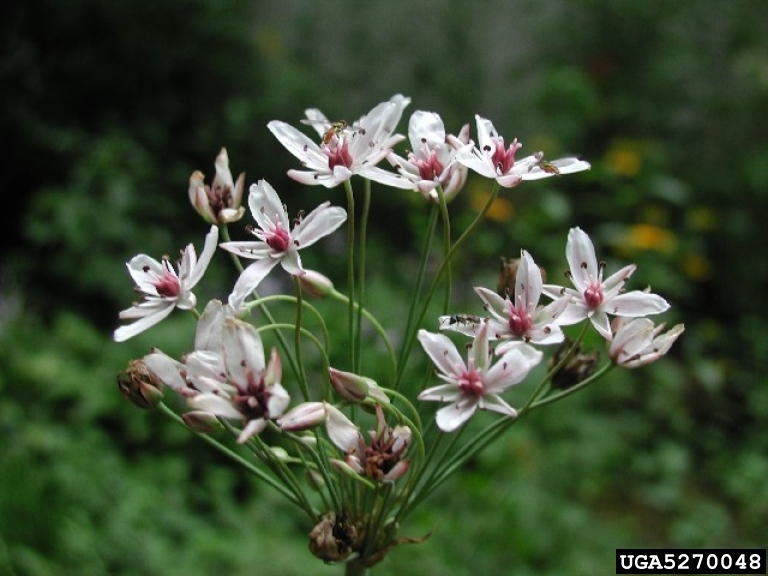
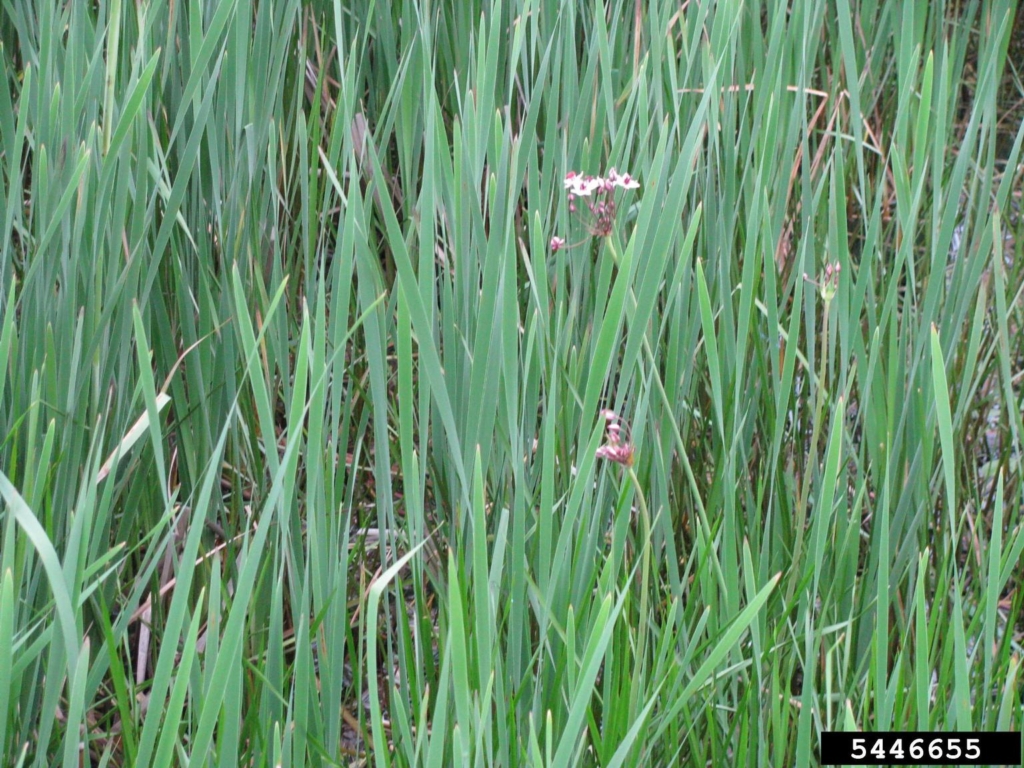
Plant Description
Flowering rush is an emergent aquatic perennial that forms stiff, triangular leaves and showy pink umbel-shaped flower clusters in mid to late summer. Though attractive, it is a high-risk invasive in many North American waterways, spreading aggressively by rhizomes and fragmenting easily during disturbance. Dense colonies displace native emergent vegetation, alter channel hydrology, and impede fish and waterfowl movement. Effective management requires early detection, careful removal to avoid propagule spread, and long-term monitoring of shorelines and slow-moving water bodies.
Plant Details
| Life Forms | |
|---|---|
| ODA Listing | |
| Soil and Moisture Conditions | |
| Suggested Actions | |
| Special Uses | |
| Shade Preference | |
| Mature Height | 5' |
| Distribution | Populations have been found in Washington, Idaho, Oregon, and a smattering of other (mostly northern) US States, and in Canada. |
| Control | This is an A-listed species in Oregon. Please report sightings to the Oregon Invasives Hotline: https://oregoninvasiveshotline.org/reports/create. |
| Reproduction and Spread | Bulbils, rhizomes, and other plant parts break off and are carried downstream to start new infestations. |
| Introduced | Native to Eurasia, first found in Canada in the late 1800's and in US in the early 1900s. |
| Look Alikes | Flowering rush look like bulrushes and true rushes when not in flower. Attractive pink flowers are distinctive. |
| Impact | It crowds out native wetland and riparian vegetation, forming dense mats which impeded fish passage, change stream hydrology, and impact recreational uses of waterways. |
| More Info |